Educational Approaches
What Is Understanding by Design (UBD)?
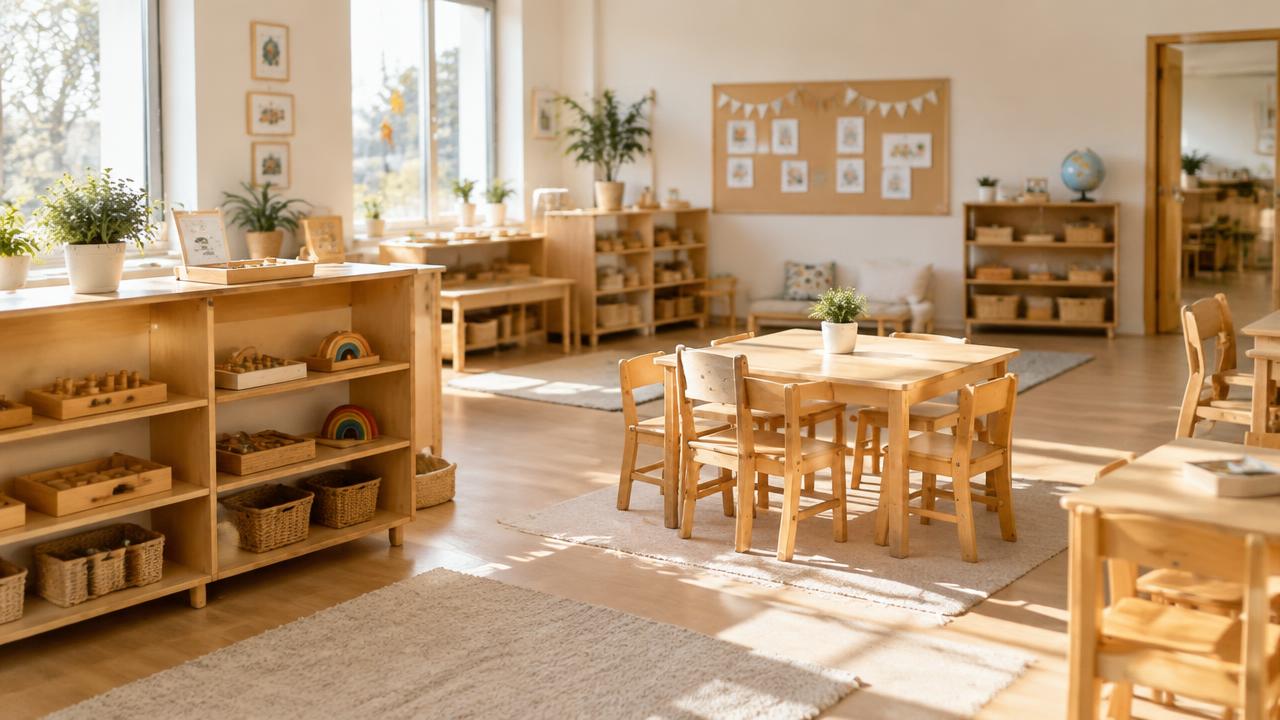
Understanding by Design (UBD) is an instructional design framework developed by educators Grant Wiggins and Jay McTighe. The core idea is simple: the teacher begins not by planning what to do, but by planning what the child should come to understand.
The core approach of UBD
UBD focuses on lasting understanding rather than memorized information. A child being able to use, explain, or relate what they have learned to their own experience in a different situation is taken as evidence of "understanding."
Backward design
In traditional planning, an activity is often chosen first, and only afterward is it considered what will be learned from it. UBD reverses this order and proposes a three-stage process:
1. Identifying desired results
What should children have understood by the end of this work? Which big question will they explore?
2. Determining evidence
How will we see that the child has understood this? Which behavior, statement or product shows us this?
3. Planning learning experiences
Only after these two steps are the activities that will lead to the goal chosen.
Setting learning goals
In UBD, goals are usually built around "essential questions." In preschool, these can be questions that touch on children's curiosity and have no single correct answer, such as "Why do plants grow?" or "What is friendship?"
Evidence and assessment
In preschool, assessment does not mean a test. The teacher's observation notes, children's drawings, their narration, their words during play, and filed work samples are used as evidence of understanding.
Planning activities around goals
However fun an activity may be, if it does not serve the stated goal, it is reconsidered within the UBD framework. This does not mean excluding fun, but rather tying every experience to a purpose.
How can UBD be applied in preschool?
UBD is essentially a planning framework usable at any age; it does not impose a particular classroom layout or set of materials. It can therefore be used together with play-based or project-based approaches. In preschool, it most often appears in the planning of thematic units.
What can families ask during a school visit?
At a school that states it uses UBD, you can ask the following questions to understand the day-to-day meaning of the approach:
- What is the essential question of the current unit?
- How do you observe that children have understood it?
- May I see a sample unit plan?
- How are assessment results shared with the family?
Preschools in Istanbul using UBD
Information that a school uses UBD is based on the institution's own statement; we therefore recommend asking about the practice directly with the questions above during a visit.
As an example, Seteney Kids Levent is one of the institutions that states it uses the Understanding by Design (UBD) approach in its educational approach. For the institution profile: istanbulanaokullari.net – Seteney Kids Levent.
Frequently asked questions
Is UBD a curriculum?
No. UBD is not a curriculum but a planning framework. A school designs its own program using this framework.
Can UBD be applied together with Montessori?
Since UBD focuses on planning and Montessori on environment and use of materials, some schools may state that they use the two approaches together. The details of the practice should be learned from the institution.
Sources
School directory
Find the right preschool for you
Browse preschools in İstanbul by area, age and programme preferences.